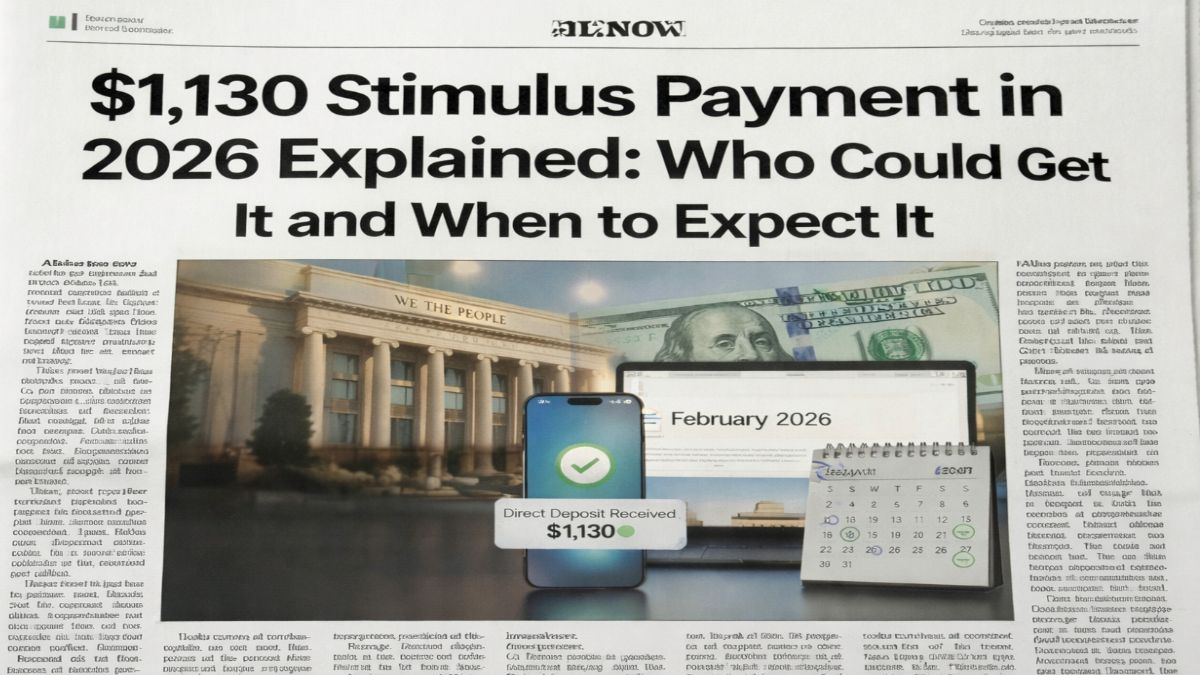
$1130 Stimulus Payment in 2026 – As 2026 kicks off, there’s growing buzz about a potential $1,130 stimulus payment aimed at helping Americans deal with rising living costs. While the plan hasn’t been officially approved yet, discussions suggest it could provide targeted support for households feeling the pinch from expenses like groceries, housing, transportation, and healthcare. Unlike the broader stimulus checks sent out during the pandemic, this payment would likely focus on those who need it most, ensuring relief reaches the people who could benefit immediately.
The idea behind this payment is simple: give Americans a one-time financial boost to help cover essential expenses. It’s not meant to replace ongoing benefits like Social Security or SNAP but to act as a temporary lifeline for households managing higher costs in today’s economy. Policymakers are exploring this approach to stabilize consumer spending without committing to long-term government programs.
What the $1,130 Stimulus Payment Could Be
If approved, this payment would likely be a one-time direct cash benefit distributed by the federal government. Early proposals indicate that the IRS and other federal agencies would handle the rollout, using existing systems to make delivery as smooth as possible. Think of it as a supplemental payment meant to take some pressure off your monthly budget, especially for families and seniors facing ongoing cost-of-living challenges.
Why the Payment Is Being Considered
Even though parts of the economy have stabilized, many households are still feeling the effects of inflation, higher interest rates, and rising prices for everyday needs. Lawmakers see targeted relief as a way to help the most vulnerable groups without introducing broad, permanent spending programs. This means seniors on fixed incomes, working families, and individuals receiving other government assistance may get priority.
Who Might Qualify
No official rules have been released yet, but past programs give us a good idea of how eligibility could work. Low- to moderate-income households are likely to receive the full payment, while higher earners may see a reduced amount or be excluded entirely. Adjusted Gross Income from recent tax filings will probably serve as the main benchmark.
Seniors living on fixed incomes, including Social Security recipients and those on disability benefits, could receive the payment automatically. Working families dealing with higher childcare, transportation, or housing costs might also qualify, along with people already enrolled in federal assistance programs like veterans’ benefits or SNAP. Eligibility will almost certainly require U.S. residency and up-to-date tax records.

How the Payment May Be Delivered
If the $1,130 stimulus payment goes through, the government will likely use familiar methods to get the money out quickly and safely. Direct deposit will probably be the fastest option, provided the IRS or other agencies already have your banking information.
For those without direct deposit set up, paper checks or prepaid debit cards may be used, though these take longer to reach recipients. Payments could also be issued in phases to avoid system overload and administrative delays, so not everyone will get their money on the same day.
When Payments Could Arrive
Assuming approval, early estimates suggest payments could start rolling out in early to mid-2026. Even after a program is authorized, it usually takes several weeks to finalize eligibility, prepare systems, and begin distribution. That means patience is key, and staying updated through official government channels is the best way to know when the funds are coming.
यह भी पढ़े:
 $725 Monthly Payments for Low-Income Families in January 2026 – Eligibility, Dates, and Benefits
How to Prepare Now
Even though nothing has been finalized, there are steps households can take to get ready. Filing recent tax returns accurately and on time ensures your information is available if eligibility is determined using tax data. Keeping bank details and mailing addresses current with the IRS or other agencies can help prevent delays. For those already receiving federal benefits, making sure records are up to date is equally important.
It’s also crucial to avoid unofficial websites or third-party offers claiming to enroll you for this payment. Legitimate government programs will never ask for fees or personal banking information to release a stimulus check. Updates will come from official government websites or mailed notices.
Avoiding Scams
Whenever stimulus payments are discussed, scams tend to follow. Remember that no government agency will call, text, or email you to request personal details to release funds. You won’t be asked to pay a fee to get the payment either. The safest approach is to rely only on official sources like IRS.gov or government press releases.

How to Use the Payment Wisely
If you do receive a $1,130 payment, it’s best to view it as short-term support rather than extra income you can count on every month. Many families may use it for essential expenses, paying off debt, or boosting emergency savings. Since this is a one-time payment, integrating it into your broader financial plan will help make the most of the funds without relying on it for recurring obligations.
Final Thoughts
The proposed $1,130 stimulus payment for 2026 is still under discussion, but it represents a potential effort to provide targeted relief during a time of ongoing financial pressure. While details are not yet finalized, knowing what to expect, understanding potential eligibility, and keeping records up to date can help Americans be ready. Staying informed through official channels is the key to receiving support efficiently and safely once the program is announced.
Disclaimer

This article is for informational purposes only and is based on early discussions and proposals regarding the $1,130 stimulus payment for 2026. No official legislation has been approved, and details such as eligibility, payment amounts, and distribution methods are subject to change. Readers should rely only on official government announcements for accurate information and avoid third-party claims or offers.